Inca Trail vs Salkantay trek, compared
Both treks take four days and end at Machu Picchu; they differ on the permit, the altitude, where you sleep and what you see. The comparison uses the top-rated tour on each route, both run by the same operator.
| Inca Trail | Salkantay | |
|---|---|---|
| Permit | Yes — 500 a day incl. staff | None easier |
| Highest point | 4,215 m lower | Near 4,600 m |
| Inca sites on the way | 7, incl. Wiñay Wayna more | Few — Machu Picchu at the end |
| Arrival | On foot through the Sun Gate | By train or a final walk |
| Nights | 3 in tents | Glamping, huts, 1 hotel night |
| Train home | Vistadome | Vistadome or 360° |
| Rating | ★ 4.94 (617) | ★ 4.78 (31) |
| Price, one adult | $798 | $564 cheaper |
| February | Closed | Runs open |
| Check Inca Trail | Check Salkantay |
Which is harder, prettier, easier to book?
Salkantay is higher and wilder; the Inca Trail is steeper on stone steps and richer in ruins. Neither is easy, and both are guided all the way.
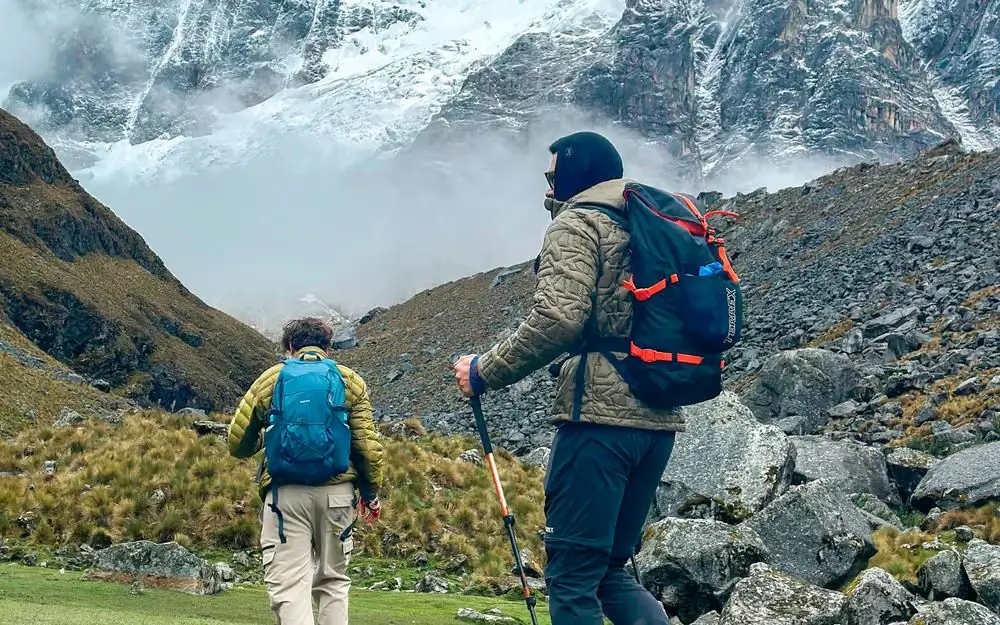
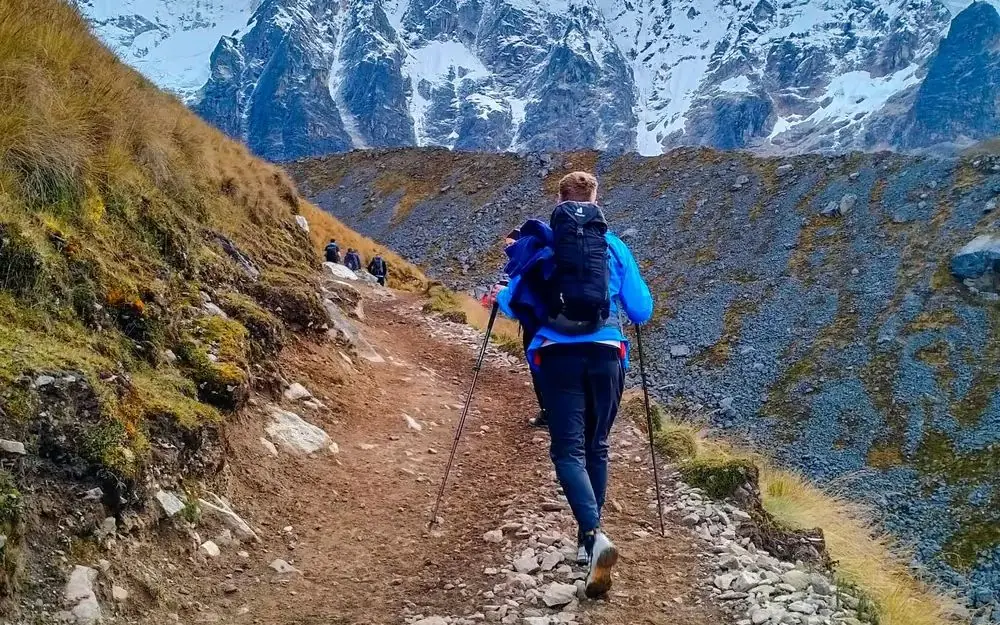
Its pass sits near 4,600 m; the Inca Trail's Dead Woman's Pass is 4,215 m but with long stone staircases.
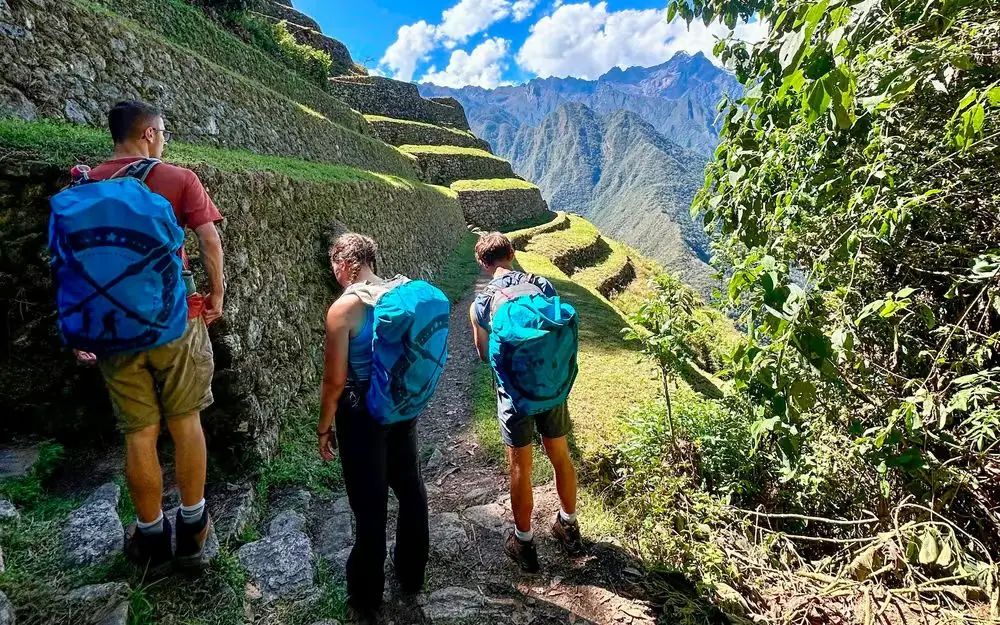
Slightly harder: SalkantaySalkantay: glacier, high lakes, cloud forest. Inca Trail: terraces and ruins along the path.
Tie — depends on tasteSeven Inca sites you can only reach on foot, ending at the Sun Gate.
Winner: Inca TrailNo permit, no quota, and it runs in February.
Winner: SalkantayGlamping, Andean huts and a hotel night vs three nights in tents.
Winner: Salkantay$564 vs $798 on the top-rated tours, both selling to one adult.
Winner: SalkantayIs Salkantay harder than the Inca Trail?
Slightly, because Salkantay climbs higher: its pass sits near 4,600 m, against 4,215 m on the Inca Trail's Dead Woman's Pass. The Inca Trail is steeper underfoot, with long runs of original stone steps up and down, while Salkantay is more of a mountain path. On both, the hardest day is the pass day, and guides set a pace the slowest walker can keep.
Acclimatise in Cusco for two or three days before either trek. If altitude worries you more than steps, the Inca Trail is the gentler choice; if steps hurt your knees, Salkantay is kinder on the descent.
Scenery on the Inca Trail vs Salkantay
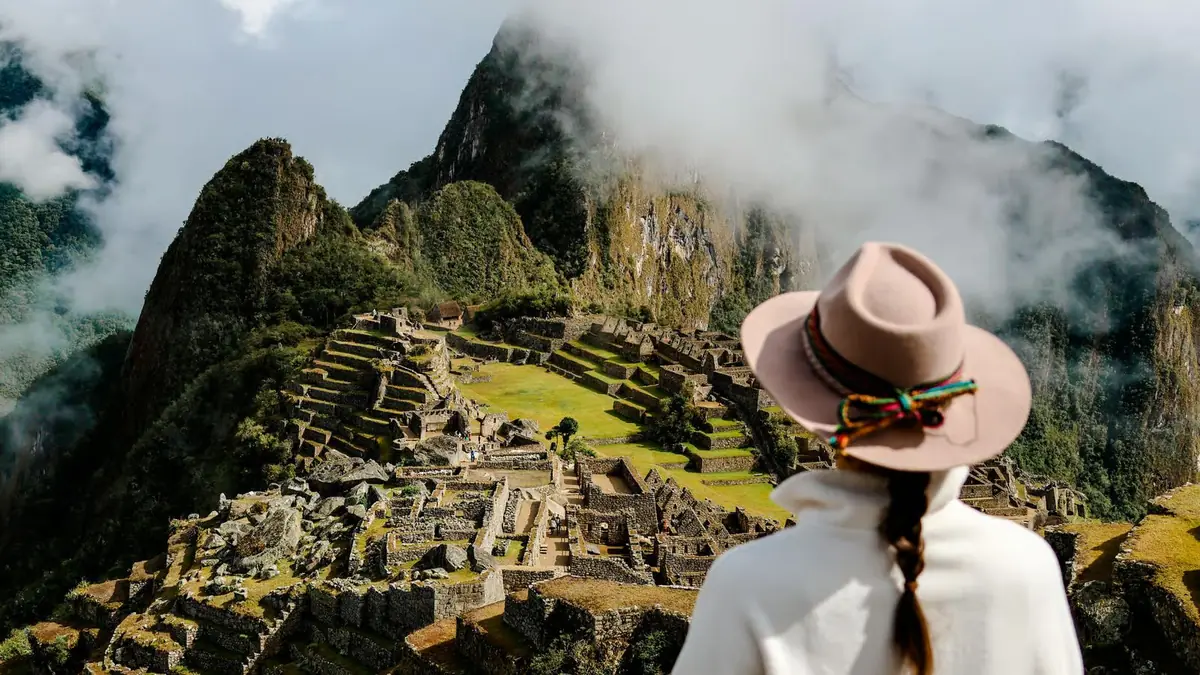
Salkantay is the more dramatic mountain trek — a glacier, high lakes and a long descent into cloud forest — while the Inca Trail is the richer one in history, passing seven Inca sites you can only reach on foot. Only the Inca Trail ends at the Sun Gate with the first view of Machu Picchu from above; Salkantay reaches the citadel from Aguas Calientes.
Camping on the Inca Trail vs huts on Salkantay
The Inca Trail is three nights in tents at fixed camps; the top-rated Salkantay tour mixes a glamping night, a night in Andean huts and a hotel night in Aguas Calientes. That makes Salkantay the softer trek to sleep on, and a better fit for anyone unsure about four days of camping at altitude.
On both treks the crew carries the gear: porters on the Inca Trail, horses and muleteers on Salkantay, with a personal allowance of about 7 kg on the top tours.
Inca Trail sold out? Salkantay is the closest substitute
If your Inca Trail dates are gone, Salkantay is the alternative that feels most like the classic: four days, a high pass, guided camps and Machu Picchu at the end. The 2-day short trail is the other option — it keeps the Sun Gate but skips the multi-day trek. Alpaca Expeditions also runs a 5-day Salkantay for those who want one more day in the mountains.
The two tours we compared
Inca Trail or Salkantay: questions
Is Salkantay harder than the Inca Trail?
A little: its pass is higher, near 4,600 m. The Inca Trail has more stone steps.
Does Salkantay end at the Sun Gate?
No. Salkantay tours reach Aguas Calientes and visit Machu Picchu from there.
Can I do both?
Some multi-day trips combine Salkantay with the last part of the Inca Trail; otherwise book them as two trips.
Which is better for beginners?
The 2-day short Inca Trail is the gentlest; between the 4-day treks, the Inca Trail is lower but steeper.
Do I need a permit for Salkantay?
No — there is no quota, so you can book closer to the date.
Which is cheaper, Salkantay or the Inca Trail?
Usually Salkantay: the top-rated Salkantay with a panoramic train costs $564 for one adult, the top-rated Inca Trail tour $798.