Guide · difficulty

Inca Trail Hike

TL;DR: The classic four-day hike is moderate to hard: 42–46 km, about 1 200 m of climbing on the morning of day two to 4 215 m, and three nights in tents. The short two-day hike is moderate: about 12 km, three to four hours uphill, no pass, a hotel bed. Altitude matters more than fitness — two nights in Cusco first.

Check dates on the easier 2-day trek
sells to one traveller · non-refundable
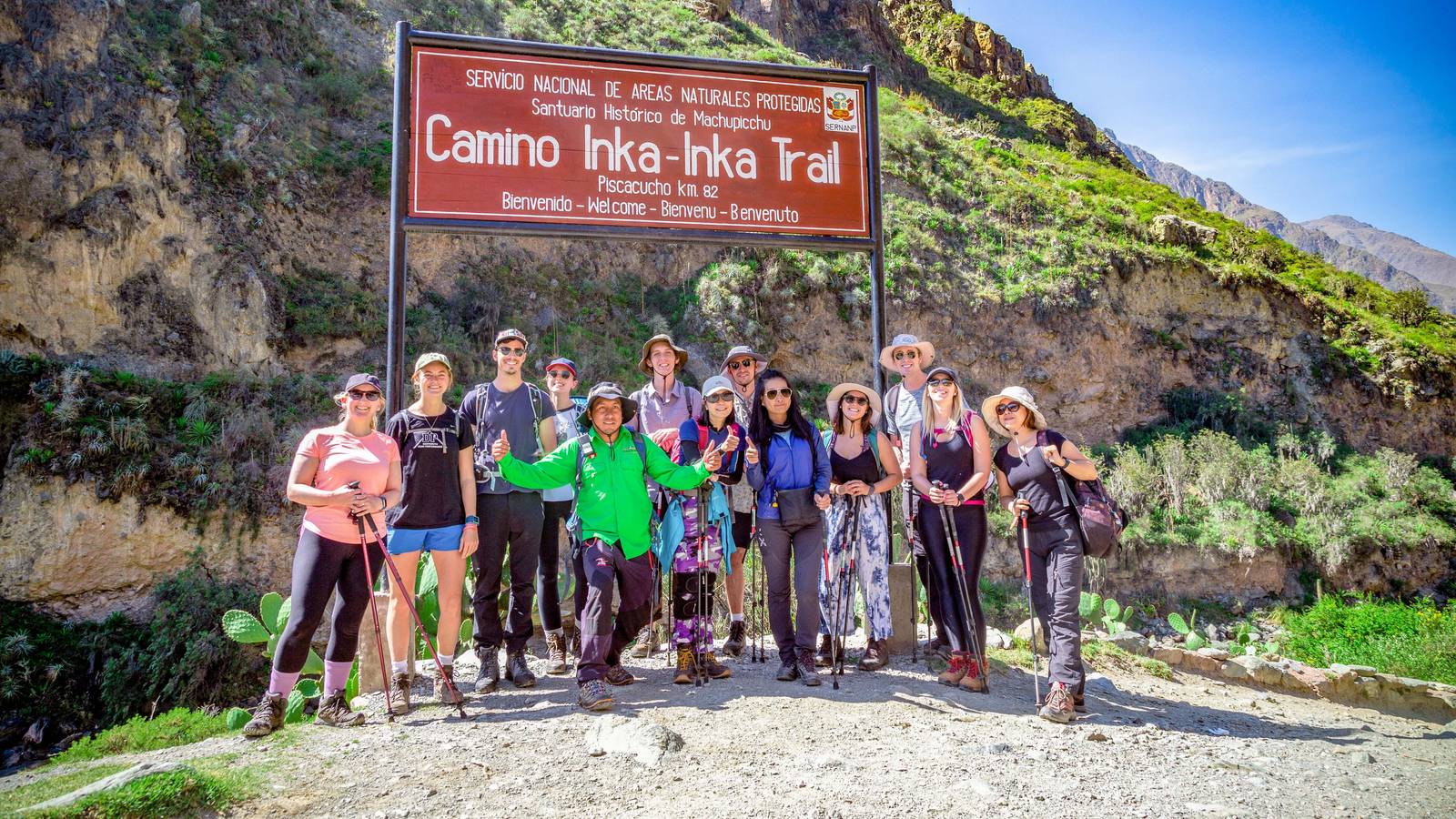
Trekkers climbing towards Warmiwañusca
Day two: the climb to Warmiwañusca, 4 215 m
4 215 mWarmiwañusca, day two
~1 200 m of ascent on the morning of day two42–46 km over four days; ~12 km in one day on the short trail3 400 m in Cusco — two nights there before you start
By format, in numbers

How Hard Is the Inca Trail

The classic four-day trail is the hard one, and the second day is the reason. You start at Km 82 at 2 720 m, sleep the first night around 3 000 m and on day two climb to Warmiwañusca at 4 215 m before a steep stone descent to the second camp. That is roughly 1 200 m of ascent in a morning, at an altitude where most people breathe hard on stairs. Days three and four are long but gentler.

Formatkm per dayAscentHighest pointNightsHard for
Classic 4 days10–14~1 200 m on day 24 215 m3 in tentsfirst day at altitude, knees on the descent
Short 2 days~12~600 m~2 730 m1 in a hotel3–4 h uphill in heat
One day~12~600 m~2 730 mnonea 14-hour day door to door
Salkantayvarieslong climb to the pass4 600 m+3–4the highest pass of all

The short two-day trail is a different scale. From Km 104 you climb for three to four hours to Wiñay Wayna and walk on to the Sun Gate by afternoon: about 12 km in one day with a proper uphill, but no pass, no camping and a hotel bed in Aguas Calientes that night.

Not sure?The short trail is the right answer, not a smaller group on the long one. You still walk original stone and enter through the Sun Gate.

Check dates · $592sells to one traveller · non-refundable
Before you start

Altitude, Training and Age

Altitude matters more than fitness. Cusco sits at 3 400 m, higher than any point on the short trail and only 800 m below the pass. Two nights there before you start — three if you can — do more for day two than any training plan. A day hike near Cusco, such as the one to Huchuy Qosqo sold as acclimatization, is a good second day.

  1. Arrive two nights early and sleep in Cusco or the Sacred Valley.
  2. Walk stairs for an hour at a time in the weeks before; the trail is mostly steps.
  3. Break in your boots; the descents are long and stony.
  4. Rent poles at the briefing if you have weak knees.

Age is less of a limit than people fear. Trekkers in their sixties walk the classic route; one reviewer of the most-booked trek, 65, wrote that the two passes were hard but the trek was worth it. Several listings set a minimum age for children; check each one.

“I am 65 years old, and at that age you first lose muscle mass and fibers in your legs. I could feel that, it was really hard for me.”Flemming · 12 Jul 2026 · review of the most-booked 4-day trek
Check dates · $592sells to one traveller · non-refundable
Words people use

Inca Trail Trek or Hike — The Same Walk

"Inca Trail trek" and "Inca Trail hike" mean the same thing on every listing: a guided walk with a permit, on the original stone road, with porters or at least cooks. "Trek" is more common for the four-day version with camping, "hike" for the short trail and day walks, but the product is the same.

Inca Trail hike Cusco
Any listing that starts from a Cusco hotel pickup, which is all of them.
Trail running
Not allowed on a permit: groups walk with their guide, and the control points expect you at a walking pace.
Porter
Carries tents, food and 5–7 kg of your things on treks that include one; the cheapest classic listing includes none.
The hard morning

Inca Trail Trek Cusco to the Pass: Day Two in Detail

The second day decides how the trek feels. Guides wake the camp early, and the climb from the first camp to Warmiwañusca is steady stone steps through high grassland, with the air thinning above 3 800 m. Most groups reach the pass by late morning and rest there before the descent.

StretchDistanceWhat it feels like
First camp to the pass~7 km upthe long climb, ~1 200 m of ascent
At the pass4 215 mcold and windy; photos and a rest
Pass to the second camp~3 km downsteep stone steps, hard on the knees

The day ends early at the second camp, around 3 600 m, with the coldest night of the trek: the listing that gives temperatures says 3 °C at night on day two. A warm sleeping bag matters more than a heavy jacket.

What helps mostSlow and steady from the first step, water every half hour, and poles for the way down.
Read before you book

Treks We Reviewed, from Hardest Day to Easiest

Six reviewed treks with the facts that change how hard the days feel: porter kilograms, group size and where you sleep.

Machu Picchu: 4-Day Inca Trail Hike & Panoramic Train
Read the review — our pick: sells to one at the listing price, 7 kg porter, toilet tent, Vistadome back.
From Cusco: 4-Day Inca Trail Guided Trek to Machu Picchu
Read the review — the close second: 123 reviews at 4.9, 7 kg porter, Expedition train back.
Cusco: Machu Picchu Inca Trail 4-Day Trek
Read the review — the cheapest classic at $750 each for two, but the porter and the train back are add-ons.
Premium Inca Trail Trek to Machu Picchu
Read the review — the premium trek: eight at most, a four-person tent for two, $1,499 each for two.
Cusco: 4-Day Inca Trail to Machu Picchu with Accommodation
Read the review — the Inca Jungle, not the Inca Trail: 862 reviews, bike and hot springs, from $470.
From Cusco: 4-Day Inca Jungle Adventure to Machu Picchu
Read the review — bike, raft and zipline in groups of ten; $560 each for two, $1,040 alone.
By format

Inca Trail Hike Difficulty, Format by Format

FormatOn footHighest pointNightsHardest part
Classic, 4 days42–46 km4 215 m3 in tentsday two, about 1 200 m of climbing
Short, 2 days~12 km2 730 m1 in a hotelthe steps after Wiñay Wayna
One day~12 km2 730 mnonea 14-hour day
Salkantay, 4 daysnot statedabout 4 600 m3, camp to hotelthe pass
Inca Jungle, 4 dayspart of the routeby road3 in hostelsthe bike descent

Distances and heights from the listings and facts file, 28 Sep 2026.

If the high pass is what worries you, the short trail walks the last and prettiest 12 km with no pass at all and a bed at the end of the day. The Vistadome trek is the two-day trek we would book first.

The days before

Two Days in Cusco Before You Start

Cusco sits at about 3 400 m, higher than any point on the short trail. Two or three days there before a classic trek let your body adjust before the climb to 4 215 m.

  1. Day one: walk slowly, drink water, skip alcohol.
  2. Day two: a gentle hike above the city or in the Sacred Valley.
  3. The evening before: the briefing at your operator's office, where you collect the duffel for your porter.

Warning from reviewsSeveral reviews of the classic treks say the same thing: do not underestimate the altitude on day two.

Check dates · $592sells to one traveller · non-refundable
Difficulty questions

Inca Trail Hike FAQ

Kilimanjaro, by a wide margin. Its summit is 5 895 m against 4 215 m on the Inca Trail, and summit night is far longer and colder. The Inca Trail is a moderate high-altitude trek; Kilimanjaro is a serious expedition. Many people do the Inca Trail first.

No. Every trekker walks with a licensed operator's guide at the group's pace, and there is no running permit. If you want to run, the day hikes near Cusco are open trails without a permit.

Fit enough to climb stairs for an hour at a time. The classic route asks for about 1 200 m of ascent in a morning at altitude; the short trail about 600 m with no pass. Acclimatization in Cusco matters more than training.

Day two of the classic trek: the climb to Warmiwañusca at 4 215 m and the steep stone descent to the second camp. Day three is the longest in distance but easier.

Moderate rather than easy. It is three to four hours uphill from Km 104 in the valley heat, six to eight hours in all. There is no pass and no camping.

Yes, on many listings; some set a minimum age. One short-trail listing is sold as family-friendly. The short trail is the usual choice with children.

Spend two or three nights in Cusco or the Sacred Valley before you start, drink water, walk slowly on day two and tell your guide early if you feel unwell. The guides on the most-reviewed treks carry oxygen and a first-aid kit.

Six to eight hours on each of the first three days of the classic trek, with breaks; day four is shorter but starts in the dark. The short trail is six to eight hours in one day.

For many people, yes. After the pass on day two and through day three the trail drops on uneven stone steps for long stretches. Poles, rented at the briefing on most treks, take a lot of the strain off the knees.

A daypack, always. Your sleeping bag and clothes go with the porter on treks that include one — 5 to 7 kg depending on the listing. The cheapest classic listing has no porter, so you carry everything.

If you are not sure, start with two days

Cusco: Machu Picchu 2-Day Inca Trail with Vistadome Train

Check dates
sells to one traveller · non-refundable
Live availability · GetYourGuide

Updated 29 Sep 2026 · listing prices as of 28 Sep 2026, checkout prices checked on GetYourGuide 26–29 Sep 2026.